

How online slots work Canada: RNG fairness, RTP & volatility, payouts, and provincial vs offshore rules. Learn KYC, withdrawals, and safer play tips.
Online slots in Canada can feel deceptively simple: pick a game, set a bet, hit spin. But under the hood, every slot is a bundle of math (RTP and volatility), software (RNGs and virtual reels), and rules (provincial regulation, KYC checks, payout limits). If we don’t understand those layers, it’s easy to misread what’s happening, thinking a game is “hot,” assuming we’re “due,” or choosing a casino because the lobby looks slick.
In this guide, we’ll unpack how online slots work in Canada in plain terms: what actually determines a spin, how payouts are calculated, what RTP and volatility do (and don’t) tell us, and how Canadian regulation differs by province, especially the big split between provincially regulated sites and offshore casinos. We’ll also cover practical stuff that matters just as much as the reels: withdrawals, ID checks, and how to play responsibly without turning “fun” into friction.
Read more in Canada Online Casino Slots.
Key Takeaways
- How online slots work in Canada comes down to software: an RNG determines each spin independently, and the reels are just animation.
- Use the paytable as your reality check because it shows win rules, bonus triggers, max win caps, and whether bet size changes eligibility for features or jackpots.
- RTP explains the long-run return across massive spin volumes, while volatility explains how swingy your sessions feel—even when two games have similar RTP.
- Don’t fall for “hot,” “cold,” or “due” thinking: legit online slots don’t remember past spins, and near-misses don’t increase your odds.
- Canadian player protections vary by province, so prioritize provincially regulated platforms (including Ontario’s regulated market) with clear licensing, audits, and responsible gambling tools over offshore sites.
- Protect withdrawals by completing KYC early, checking withdrawal limits and processing timelines, and skipping bonuses with terms you can’t explain in under a minute.
What Online Slots Are (And How They Differ From Land-Based Machines)
Online slots are digital games of chance that replicate (and often expand on) the idea of a physical slot machine: reels with symbols, winning combinations, and bonus rounds. The key difference is that online slots don’t rely on mechanical reels or physical hardware to “stop.” The outcome is determined by software.
Land-based machines also use RNGs in modern casinos, but the experience is anchored to a physical cabinet with local regulation, on-site auditing, and fixed hardware. Online slots, by contrast, run on a platform (website/app), and the parts that keep them honest, licensing, testing, and oversight, depend heavily on where the casino is regulated.
In Canada, that last point matters because gambling oversight is largely provincial. So the same-looking game can be offered under very different consumer protections depending on whether we’re playing on a provincially regulated site (or a regulated Ontario operator) versus an offshore site.
Digital Reels, RNGs, And Virtual Paytables
In online slots, what we see as “reels” are really an animation layer. The actual outcome is generated by an RNG (random number generator) that selects a result, and the game then displays symbols that match that result.
A few core building blocks show up in almost every online slot:
- Virtual reels: These are not limited by physical constraints. A reel can effectively have many more “stops” than a mechanical reel, which helps designers control symbol frequency and volatility.
- RNG-driven outcomes: The RNG generates results continuously: the spin simply captures one result at the moment we hit the button.
- Virtual paytables: The paytable explains how the game pays, symbol values, paylines/ways, scatter rules, and bonus triggers. Good slots make this information easy to find (usually behind an “i” or menu button), and regulated casinos tend to require clear rule displays.
If we’re evaluating a game, the paytable is our first reality check. It won’t tell us what we’ll win today, but it will tell us what the slot is capable of doing and what it costs to chase certain features (like buying bonus rounds, if available).
Core Slot Mechanics: How Each Spin Is Determined
When we press spin, it’s tempting to believe the game is “deciding” in that moment, like it’s watching our bet size, our last wins, or how long we’ve been playing.
That’s not how legit online slots work.
A properly built slot uses an RNG to generate outcomes independently of our history. The game doesn’t “need” to balance us out, and it doesn’t get nervous if we’re winning. Each spin is its own event.
Random Number Generators (RNG): What They Do And What They Don’t
An RNG is software designed to generate random (or pseudo-random) numbers at extremely high speed, often millions of values per second. Here’s the practical version:
- The RNG is running in the background.
- When we hit Spin, the game takes a snapshot of the RNG value.
- That value maps to a reel result (symbols on each reel) using the game’s internal math model.
What RNGs do:
- Produce outcomes that are not influenced by prior spins.
- Support audited fairness standards (when properly tested and implemented).
- Allow the same slot to run consistently across devices (mobile/desktop), because the result is determined by the math, not by the animation.
What RNGs don’t do:
- They don’t make a slot “due.” A cold streak doesn’t increase the chance of a big hit on the next spin.
- They don’t “respond” to bet changes by loosening up (outside of clearly defined mechanics like higher bets unlocking higher paylines or eligibility for certain jackpots).
- They don’t remember that we almost hit a bonus three spins ago. Near-misses are typically just a visual outcome, not a signal of increasing probability.
One detail that surprises people: the exact millisecond we hit the spin button can matter because the RNG is cycling constantly. That doesn’t mean timing skills help us, it means the system is effectively too fast to predict.
Paylines, Ways-To-Win, And Symbol Matching Logic
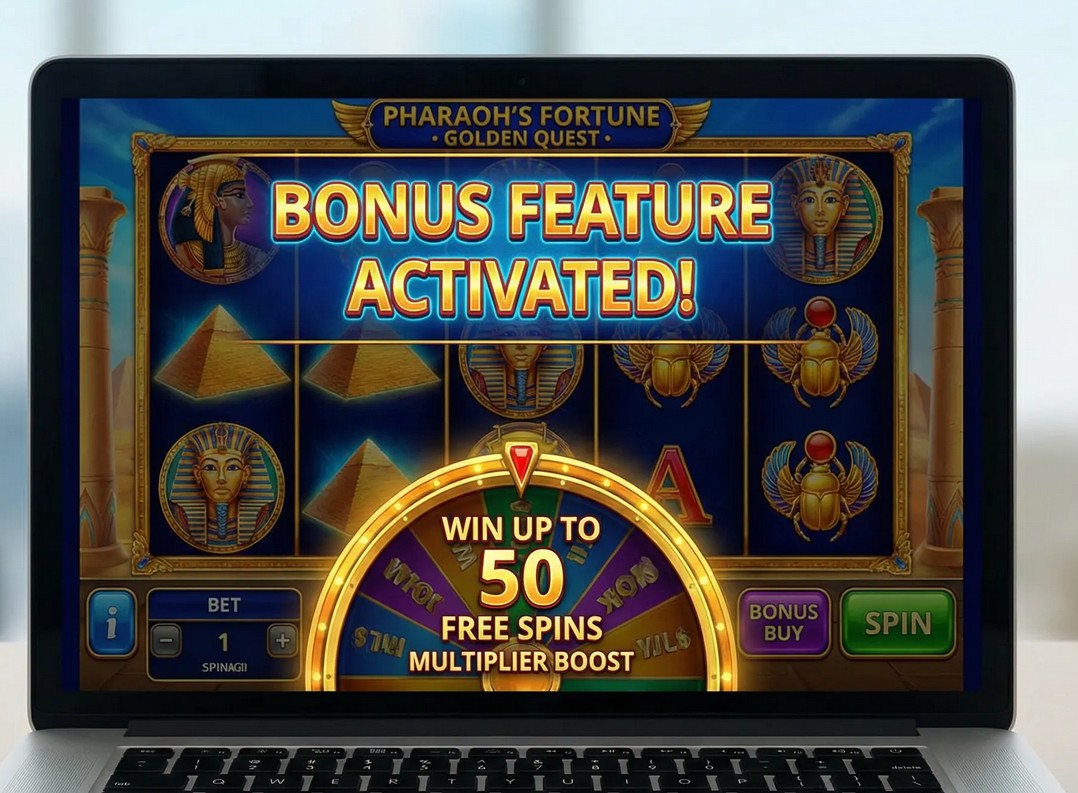
Once the RNG locks an outcome, the slot evaluates it against the win rules. Those rules vary by game type, but most fall into a few buckets:
- Paylines: A “line” is a defined path across reels. Wins pay when matching symbols land on an active payline, usually starting from the leftmost reel (though some games pay both ways).
- Ways-to-win: Instead of fixed lines, we win by landing matching symbols in adjacent reels in any position. Common formats include 243 ways, 1,024 ways, or 117,649 ways (7×7×7-style structures). More ways doesn’t automatically mean better odds, it changes how often smaller hits occur.
- Cluster/cluster-pays: We win when a group of matching symbols connects, often with cascading wins (symbols disappear and new ones fall in).
The “symbol matching logic” is basically a rules engine:
- Identify eligible matches (lines/ways/clusters).
- Apply substitutes (wilds) or special rules.
- Multiply by bet size (and any active multipliers).
- Add scatter pays (if applicable).
- Trigger bonus features if conditions are met.
Bonus Features: Wilds, Scatters, Free Spins, Multipliers, And Re-Spins
Bonus features are where modern slots separate themselves, and where bankrolls can disappear faster if we don’t understand the design.
Common features we’ll see on Canada online casino slots:
- Wilds: Substitute for other symbols (usually excluding scatters/bonus symbols). Some expand, stick, or come with multipliers.
- Scatters: Often pay anywhere on the reels and commonly trigger free spins or bonus games.
- Free spins: A set of spins where we don’t pay per spin (or sometimes we pay a smaller “feature bet”). Free spins may include special rules like extra wilds, higher multipliers, or guaranteed scatters.
- Multipliers: Increase wins by a fixed number (2×, 3×) or an escalating meter.
- Re-spins / hold-and-spin: A popular mechanic where certain symbols lock and we get a limited number of re-spins to fill a grid for prizes.
Two important “fine print” realities:
- Some bonuses change volatility dramatically. A base game may feel steady, but the real payout potential is concentrated in free spins.
- Not all features are equal across bet sizes. Certain jackpots or feature side bets may only be available if we opt in or meet a minimum stake.
Understanding Slot Math: RTP, Volatility, And House Edge
If we only learn three concepts about how online slots work in Canada, these are the ones: RTP, volatility, and house edge. They won’t predict our next session, but they explain why a slot behaves the way it does over time.
RTP Explained (Game-Level vs Session Results)
RTP (Return to Player) is the theoretical percentage of total wagers a slot is expected to return to players over an enormous number of spins, think millions or billions.
- A slot with 96% RTP theoretically returns $96 for every $100 wagered, long-term.
- That does not mean we personally get $96 back in a night.
This is where players get burned: RTP is a game-level statistic, not a promise about our session.
In Canada, RTP visibility and minimum standards can vary by regulator and market rules. For example, Ontario’s regulated market has published rules that allow slot RTPs down to a minimum (often cited as 85% in regulatory discussions). In practice, many mainstream slots sit in the mid-90s, but studios sometimes offer multiple RTP configurations (like 96%, 94%, 92%) that operators can choose from.
So our habit should be: if the casino or game info doesn’t clearly show RTP (or makes it hard to find), that’s a transparency red flag.
Volatility And Hit Frequency: Why Two Slots With Similar RTP Can Feel Different
Two slots can share the same RTP and still feel completely different.
- Low volatility: More frequent small wins, smaller swings, usually fewer brutal dry spells.
- High volatility: Fewer wins overall, but the wins can be much larger: sessions can be streaky and emotionally loud.
Related idea: hit frequency (how often any win occurs). Some games “hit” often but mostly pay tiny amounts, sometimes even less than our bet, creating that misleading sense of constant action. A slot can look generous (animations, sound effects, “win.” flashes) while still slowly draining our balance.
When we choose a slot, we’re really choosing a risk profile. RTP tells us the long-run cost of entertainment: volatility tells us whether that cost arrives smoothly or in big jolts.
House Edge And Expected Loss: Simple Examples For Canadian Players
The house edge is basically the complement of RTP:
- If RTP is 96%, the house edge is about 4% (in the long run).
A simple expected-loss example:
- If we wager $500 total over a session (not deposit, total spins), on a 96% RTP game, the long-run expected loss is about $20.
But we have to keep the “long run” part honest. On a high-volatility slot, we could just as easily:
- Lose $200 quickly on a cold run, or
- Hit a bonus and end up $300 ahead.
Expected value is a planning tool, not a prediction. It helps us set budgets that make sense:
- If we’re spinning $1 per spin at 500 spins/hour (not unusual on fast play), that’s $500 wagered per hour.
- At a 4% house edge, the long-run cost is about $20/hour, again, with wide session swings.
That’s why our best control lever isn’t “strategy” (slots don’t have a skill edge). It’s game selection + bet sizing + time/bankroll limits.
How Payouts Are Calculated: Paytables, Bet Size, And Max Win Rules
Payouts in online slots aren’t mysterious once we understand the three inputs:
- The paytable (what each symbol/feature pays)
- Our bet size (and whether the game uses coins/denoms)
- Any caps (max win limits, jackpot rules, bonus restrictions)
Coin Value, Denominations, And Bet Multipliers
Different slots display bets differently:
- Some use a simple total bet (e.g., $0.20, $1.00, $5.00).
- Others use coin value × number of coins.
- Many also include a bet multiplier or feature bet toggle.
The important part: payouts are typically scaled to our total bet. If a symbol pays “10×” and our bet is $1.00, the win is $10. If our bet is $0.20, it’s $2.
We should also watch for:
- Minimum/maximum bet ranges (especially if we’re trying to stretch a bankroll)
- Bonus buy prices (often 50×–200× the bet, which can change risk fast)
- Side bets that qualify for jackpots or extra features
Paytable Reading: Line Wins, Scatter Pays, And Feature Triggers
A paytable usually answers four questions we actually care about:
- What wins? (which symbols pay and in what combinations)
- How do wins form? (paylines, ways, clusters)
- What triggers bonuses? (how many scatters/bonus symbols)
- What special rules apply? (wild behavior, multipliers, re-triggers)
A quick, practical way to read it:
- Start with the highest-paying symbol and check what it pays for the maximum match length.
- Then find scatter rules: do scatters pay, trigger free spins, or both?
- Look at feature triggers: is it 3 scatters anywhere, or does placement matter?
- Confirm whether wins pay left-to-right only or both ways.
And one more thing we shouldn’t skip: some slots show “max win” in the info menu, like 5,000×, 10,000×, or 50,000× bet. That number matters more than most of the marketing.
Jackpots In Online Slots: Fixed, Progressive, And Must-Hit-By
Jackpots in online slots usually come in three main types:
- Fixed jackpots: A set top prize (e.g., $10,000) that doesn’t change.
- Progressive jackpots: A portion of wagers contributes to a growing prize pool. These can be local (one casino network) or wide (many casinos). Progressive wins often come with eligibility rules, like minimum bet requirements.
- Must-hit-by jackpots: The jackpot grows until it hits a cap (for example, “must hit by $5,000”), meaning it must pay out before reaching that number. This tends to create more frequent jackpot events, but usually smaller than big progressives.
When jackpots are involved, we need to check:
- Eligibility: Do we need a minimum bet or side bet?
- Contribution rules: Does every wager contribute or only eligible ones?
- Payout method: Some jackpots pay instantly: others can involve verification steps (especially for large wins).
A sensible approach: we treat jackpots as entertainment upside, not a plan. If we chase them with a bet size that doesn’t fit our budget, the math catches up quickly.
Where Online Slots Are Legal In Canada: Provincial Rules And Real-World Options
This is the part that confuses most people, and it’s not their fault: Canada doesn’t have one single nationwide online casino framework.
Instead, gambling is largely handled at the provincial level, which means what’s “legal,” what’s regulated, and what consumer protections apply can vary depending on where we live.
In real life, we’ll see two broad categories of options:
- Provincially regulated platforms (government-run or government-authorized)
- Ontario’s regulated iGaming market (private operators under provincial oversight)
Alongside those, Canadians also encounter offshore casinos marketed to Canadian players. Those sites may be accessible, but accessibility isn’t the same thing as being regulated in a way that gives us local dispute resolution or consistent protections.
Provincially Regulated Sites vs Offshore Casinos: Key Differences
If we’re trying to make a safe choice, this comparison is the big one.
Provincially regulated (including regulated Ontario operators) typically offer:
- Clear licensing/regulator information that applies to our province
- Enforced standards for responsible gambling tools (limits, time-outs, self-exclusion)
- KYC/ID verification that’s annoying but protective
- Audited games and compliance expectations
- A practical complaint path (not perfect, but real)
Offshore casinos often offer:
- Bigger bonuses and looser promos (sometimes)
- Less consistent transparency around audits, RTP versions, and dispute handling
- Policies that can be harder to enforce if something goes wrong
We’re not here to pretend every regulated experience is flawless. But regulation acts as a safety layer: it increases the odds that rules are disclosed, payouts follow stated terms, and disputes have somewhere to go.
A simple rule we can live by: we choose casinos that can clearly tell us who regulates them, what license they hold, and how complaints are handled.
Age, Location, And Account Verification Basics
Most Canadian gambling sites require that we:
- Meet the minimum age set by the province (commonly 18+ or 19+, depending on jurisdiction)
- Be physically located in an eligible area (especially for regulated markets like Ontario)
- Complete identity checks (KYC) at some point, often before first withdrawal
KYC typically involves:
- Government-issued photo ID
- Proof of address (bank statement/utility bill)
- Sometimes payment method verification
This isn’t just bureaucracy. It’s used to prevent fraud, underage gambling, and chargeback abuse, and it’s one of the reasons regulated casinos can process large withdrawals more safely.
Licensing, Game Testing, And Fairness Audits In Practice
When we hear “audited” or “tested,” we should ask: tested by whom?
Common independent testing labs in the gambling industry include:
- eCOGRA
- iTech Labs
- GLI (Gaming Laboratories International)
- BMM Testlabs
In practice, fairness oversight can include:
- RNG testing (does it produce statistically random results?)
- Game verification (does the slot pay according to its published RTP and rules?)
- Platform audits (are transactions, balances, and reporting handled properly?)
What we should look for on a legitimate site:
- Visible licensing details (not buried, not vague)
- Clear rules for bonuses, max bet limits, and withdrawals
- A game catalog from reputable providers
- Responsible gambling tools that are easy to find
If a casino is loud about VIP perks but quiet about licensing and player protections, we should treat that as a signal, not background noise.
Payments And Taxes In Canada: Deposits, Withdrawals, And Recordkeeping
For most of us, the true test of an online casino isn’t the slot lobby, it’s the cashier.
Deposits are usually instant. Withdrawals are where policies, verification, and processing standards show their real shape. If cashouts are confusing, slow without explanation, or constantly “pending” with new hoops, we should take that seriously.
Common Payment Methods And Processing Timelines
Common funding methods Canadian players run into include:
- Interac options (often smooth for deposits: withdrawal support depends on the operator)
- Credit/debit cards (sometimes blocked by banks: withdrawals to cards can be limited)
- E-wallets (often faster once set up, and sometimes preferred for withdrawals)
- Bank transfers (reliable but typically slower)
Two-stage timeline reality: withdrawals often have
- Casino processing/approval time (including security reviews)
- Payment rail/banking processing time
So when a casino advertises “withdrawals in 24 hours,” we should read the details: is that approval time only, or time-to-bank?
ID Checks, Withdrawal Limits, And Responsible Banking Controls
Most reputable casinos will eventually require KYC, especially before the first withdrawal or a large cashout. Our best move is to complete verification early, before we’re sitting on a win and suddenly racing a document deadline.
Other common policies we should expect:
- Withdrawal limits: daily/weekly/monthly caps, sometimes tiered by VIP level
- Source-of-funds checks: for very large transactions or unusual patterns
- Responsible banking controls: deposit limits, cooling-off options, and transaction history we can actually download
We also want to read bonus terms for cashout friction:
- Wagering requirements (e.g., 30×–35×)
- Max bet limits while a bonus is active
- Game weighting (slots contribute more than table games: some games may be excluded)
- Expiry dates
Our rule of thumb: if we can’t explain the bonus terms in under a minute, we skip it. “Free money” that locks up our withdrawal isn’t free.
How Gambling Winnings Are Typically Treated For Tax Purposes
In Canada, casual gambling winnings are typically not taxable. That’s the general principle most players rely on.
But, taxes can become relevant if our gambling activity looks like a business, for example, systematic, profit-seeking behavior with a level of organization that resembles income generation.
Because personal circumstances matter, we shouldn’t treat any single blog post as tax advice. What we can do is keep clean records so we’re not scrambling later, especially for large withdrawals:
- Deposit and withdrawal receipts
- Win/loss summaries or account statements
- Bonus terms we accepted (screenshots help)
If we’re playing at high volume, withdrawing significant amounts, or treating gambling like a serious income stream, it’s worth speaking with a qualified Canadian tax professional. Recordkeeping is cheap: confusion is expensive.
Responsible Play And Safety: Picking Games And Setting Limits
Slots are entertainment products, not puzzles we can solve. We can’t “outplay” an RNG. But we can choose smarter games, manage risk, and use the safety tools that legitimate Canadian-facing platforms provide.
The goal isn’t to drain all spontaneity out of slot play. It’s to keep play fun, and to stop a bad session from turning into a bad month.
How To Evaluate A Slot Before You Play (RTP Info, Volatility Clues, Demo Mode)
Before we wager real money, we can do a quick pre-flight check:
- Find the RTP: Look in the game info/help screen. If the RTP is hidden, that’s a negative signal.
- Look for volatility hints: Some games label volatility directly (low/medium/high). If not, clues include max win size (very high max wins often correlate with higher volatility) and how much value is packed into bonus rounds.
- Use demo mode: Free-play demos are underrated. We can test:
- How quickly the balance swings at our intended bet size
- How often features trigger (not to predict, but to feel pacing)
- Whether the game’s “wins” are mostly tiny payouts below the bet
We can also evaluate the casino, not just the slot:
- Transparent paytables and rules
- Clear transaction history in the cashier
- Reputation for consistent withdrawals (patterns matter more than a few angry reviews)
- Responsible gambling tools that are easy to locate
Limits, Self-Exclusion, And Support Resources In Canada
Legit platforms don’t hide player protections. We should expect tools like:
- Deposit limits, loss limits, and session limits
- Reality checks (time and spend reminders)
- Time-outs/cool-off periods
- Self-exclusion options (short-term and longer-term)
And we should actually use them. A good practical approach is to set:
- A deposit limit that matches our monthly entertainment budget
- A session time limit (because fast spins make spending feel slow)
- A “stop” rule for the day, win or lose
If gambling stops feeling like entertainment, if it starts feeling like urgency, support is worth reaching for early. Provincial responsible gambling programs and resources can help, and regulated sites typically link out to local support options.
Responsible play isn’t a vibe. It’s a set of small decisions we make before we’re tilted, tired, or chasing.
Conclusion
Once we strip away the flashing lights, how online slots work in Canada is pretty straightforward: an RNG locks an outcome, the paytable rules score it, and the casino’s platform pays it, within the boundaries set by licensing, verification, and withdrawal policies.
Where we can really improve our experience (and safety) is in the unglamorous choices:
- We pick casinos with clear provincial regulation, visible licensing, and real auditing/testing signals (names like eCOGRA, iTech Labs, GLI, and BMM show up often in the industry).
- We choose games using RTP and volatility the way they’re meant to be used: RTP for long-run value, volatility for short-term bankroll swings.
- We protect our cashouts by completing KYC early, reading withdrawal limits, and skipping bonuses we can’t explain quickly.
- And we treat limits and self-exclusion tools as standard equipment, not emergency measures.
Slots can be a great, lightweight form of entertainment when we approach them like a product we’re selecting, not a mystery we’re trying to beat. The math doesn’t care how we feel about a streak, but our habits do, and that’s where we actually have control.
Frequently Asked Questions: How Online Slots Work in Canada
How do online slots work in Canada on each spin?
Online slots in Canada use RNG software that continuously generates numbers. When you press Spin, the game “snapshots” one RNG value and maps it to a reel result. Each spin is independent, so previous wins, losses, or “near misses” don’t change your odds.
Are online slots in Canada legal, and does it depend on the province?
Yes, legality and consumer protections depend on where you live because gambling is regulated mainly at the provincial level. Some provinces offer government-run platforms, while Ontario has a regulated iGaming market with private operators. Always confirm the site’s regulator and license details for your location.
What do RTP and volatility mean for Canada online casino slots?
RTP is the long-run theoretical return (e.g., 96% over millions of spins), not what you’ll get in one session. Volatility describes short-term swinginess: low volatility pays smaller wins more often, while high volatility pays less often but can hit bigger. Together, they guide risk and bankroll planning.
How are payouts calculated in online slots (paylines, ways, and paytables)?
Payouts come from the slot’s paytable rules plus your total bet. After the RNG locks results, the game checks paylines, ways-to-win, or clusters, applies wilds/multipliers, and adds scatter pays or bonus triggers. Many games also display a max-win cap (like 10,000× bet).
How can I tell if a Canada online slots site is legit and safe?
Look for clear, verifiable licensing that applies where you live, plus transparent rules, RTP/paytable access, and responsible gambling tools (limits, time-outs, self-exclusion). Reputable sites also reference independent testing labs like eCOGRA, iTech Labs, GLI, or BMM, and show consistent payout behavior without repeated complaint patterns.
What are the best payment methods for online slots withdrawals in Canada?
Interac options are common for deposits, but e-wallets often deliver smoother, faster withdrawals once set up. Cards can be blocked by banks and may not support cashouts, while bank transfers are reliable but slower. Remember withdrawals are usually two-stage: casino approval (often including KYC) plus banking processing.
See more about Casino and Slots tips in Canada:
- How To Choose Safe Online Slots In Canada (2026): A Step-By-Step Guide To Avoid Scam Casinos
- Top Tips for Slot Beginners in Canada
- About Us
- Alf Casino Review (2026) – Games, Bonuses, Payouts, And Safety Checked
- GreenLuck Casino Review (2026) – Safety, Payouts, Games, Bonuses, And Who It’s Best For
- Responsible Gambling
- Rolldorado Casino Review – Games, Bonuses, Payout Speed, And Safety
- Spinbara Casino Review (2026): Games, Bonuses, Payouts, And Trustworthiness
- SpinGranny Casino Review (2026) – Bonuses, Games, Withdrawals, Safety, And Who It’s Best For
- SpinRollz Casino Review (2026) – Games, Bonuses, Payout Speed, Safety, And Player Feedback
- Zizobet Casino Slots Review – Features, Games, and Reliability